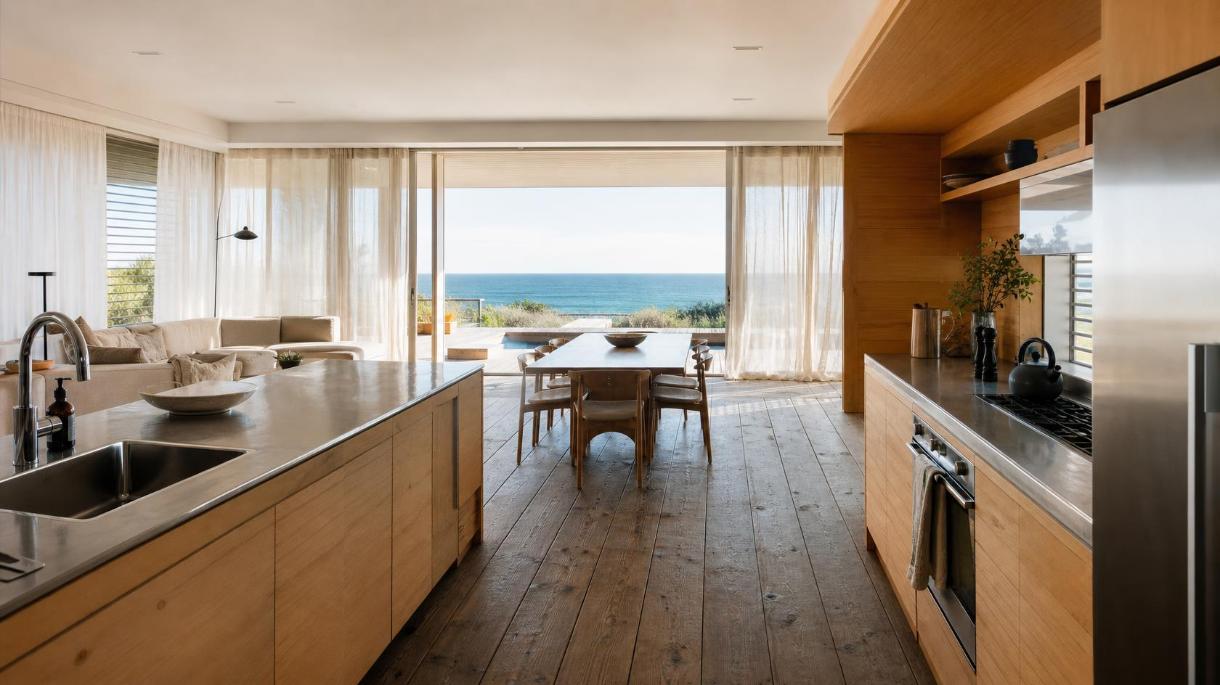
A designer friend of mine once spent three weeks picking the perfect linen curtains for a client’s beach house. Within a year they’d gone stiff and yellow. Salt air does that. It was a small failure, but it taught her something.
Interiors, like fences that were built for local conditions, hold up in ways trend-driven design never does. The fabric looked right in the showroom. It just wasn’t right for where it was going to live.
That gap, between what looks good and what belongs, is easy to miss. A lot of interior design advice online ignores climate entirely. A palette that works in a dry, temperate city can fall apart fast in a humid coastal town or somewhere with harsh winters.
Furniture warps. Paint peels. The room looks tired long before it should.
Why Climate Should Come Before Color
Most homeowners start with color swatches and furniture catalogs. Fair enough, that’s the fun part. But the smarter starting point is the environment itself. Humidity, sun exposure, temperature swings, distance from the coast.
These are the things that actually decide which materials survive daily use.
Take timber flooring. In a humid region, solid hardwood expands and contracts with the seasons and can buckle. Engineered timber, built with a layered core, handles that movement better.
Not glamorous, but it’s the difference between a floor that lasts fifteen years and one that needs replacing in five.
The Coastal Test
Coastal homes make the point clearest. Salt air corrodes metal fittings, fades upholstery, warps certain woods faster than most people expect.
A homeowner near the water told me she replaced her kitchen hardware three times in six years before switching to marine-grade stainless steel. No replacements since.
A drawer handle seems small. But it points to something bigger. Interiors that respect their surroundings need fewer repairs and fewer replacements.
That saves money, and it also saves the frustration of redoing the same job twice.
Sunlight Has Opinions Too
Direct sun does more damage indoors than people realize. Fabrics bleach. Wood dries out and cracks. Paint finishes dull faster on a west-facing wall that catches afternoon light every day.
Good designers plan for this early. UV-resistant fabrics, tinted glazing, paint with better pigment stability all cost more upfront and save far more later.
One homeowner repainted her living room twice in four years chasing a particular blue that couldn’t survive her sun-drenched windows. The third time, she used a UV-stable version of the same color. Still holding.
Designing With the Seasons, Not Against Them
Interior design isn’t static, and neither is the climate around a home. Rooms that shift with the seasons, heavier textiles in winter, breathable fabrics in summer, tend to feel intentional rather than accidental.
This doesn’t mean redecorating constantly. It means choosing base materials flexible enough to support seasonal changes without a full overhaul every few years.
Layering makes this easy. A neutral base of climate-appropriate flooring and wall treatments, paired with swappable textiles like rugs, cushions, and curtains, lets a home adapt without expensive renovation work.
The Real Payoff
This isn’t about trading style for practicality. The homes that age gracefully are usually the ones where those two goals were never fighting each other to begin with. A well-chosen material palette can look good and hold up.
It just takes designing with the local environment in mind from the start, instead of patching problems after they show up.
Concrete is a good example of this. People think of it as purely functional, something for a driveway rather than a living room.
But polished concrete floors, exposed concrete feature walls, and concrete benchtops all show how concrete can complement your house interior once it’s paired with warmer textures like timber or linen.
It handles harsh conditions with ease, and done right, it brings a grounded, quiet look that softer materials can’t quite pull off alone.
Designers who once dismissed it as cold or industrial are now using it as the anchor point of a room, then softening it with everything around it.
A room that ages faster than it should isn’t always a design failure. Sometimes the design was just never suited to the place it lives in.